IoT Communications Model
IoT Communication Models
IoT technology uses various technical communication models, each with its own characteristics. These models highlight the flexibility with which IoT devices can communicate with each other or with the client. Discussed below are four communication models and the key characteristics associated with each model.
Device-to-Device Communication Model
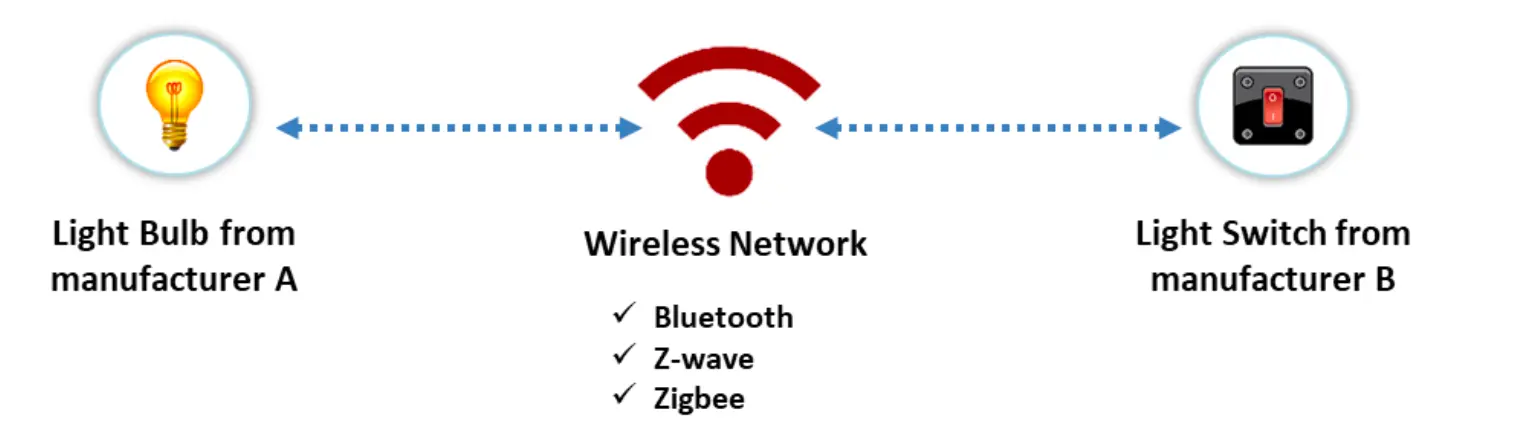
In this type of communication, inter-connected devices interact with each other through the Internet, but they predominantly use protocols such as Zigbee, Z-Wave, or Bluetooth. Device-to-device communication is most commonly used in smart home devices such as thermostats, light bulbs, door locks, CCTV cameras, and fridges, which transfer small data packets to each other at a low data rate. This model is also popular in communication between wearable devices. For example, an ECG/EKG device attached to the body of a patient will be paired to his/her smartphone and will send him/her notifications during an emergency.
Device-to-Cloud Communication Model
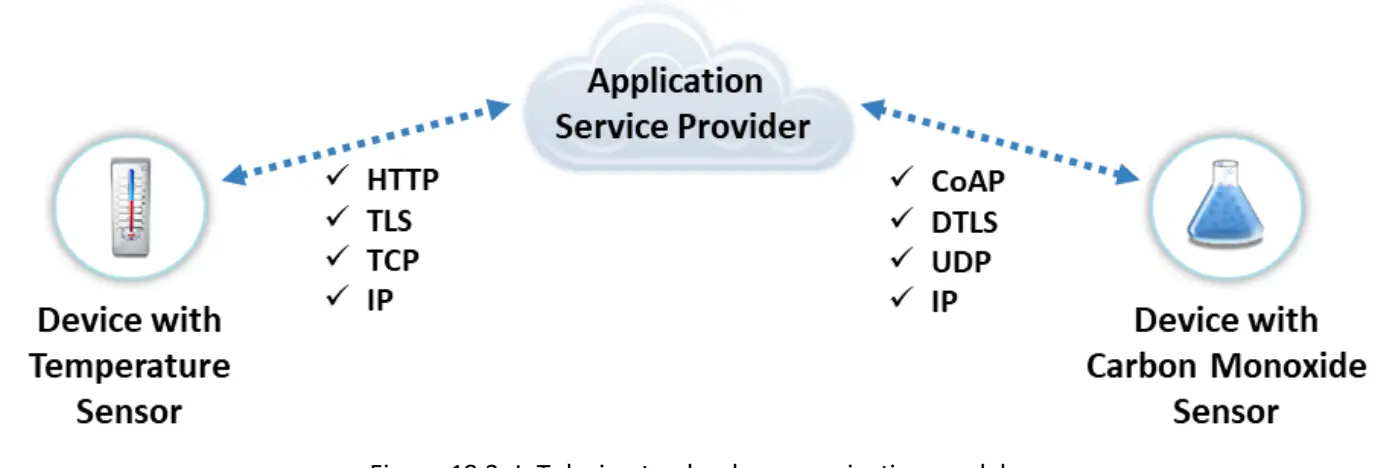
In this type of communication, devices communicate with the cloud directly, rather than directly communicating with the client to send or receive data or commands. It uses communication protocols such as Wi-Fi or Ethernet, and sometimes uses Cellular as well.
An example of Wi-Fi-based device-to-cloud communication is a CCTV camera that can be accessed on a Smartphone from a remote location. In this scenario, the device (here, the CCTV camera) cannot directly communicate with the client; rather, it first sends data to the cloud, and then, if the client inputs the correct credentials, he/she is then allowed to access the cloud, which in turn allows him/her to access the device at his/her home.
Device-to-Gateway Communication Model
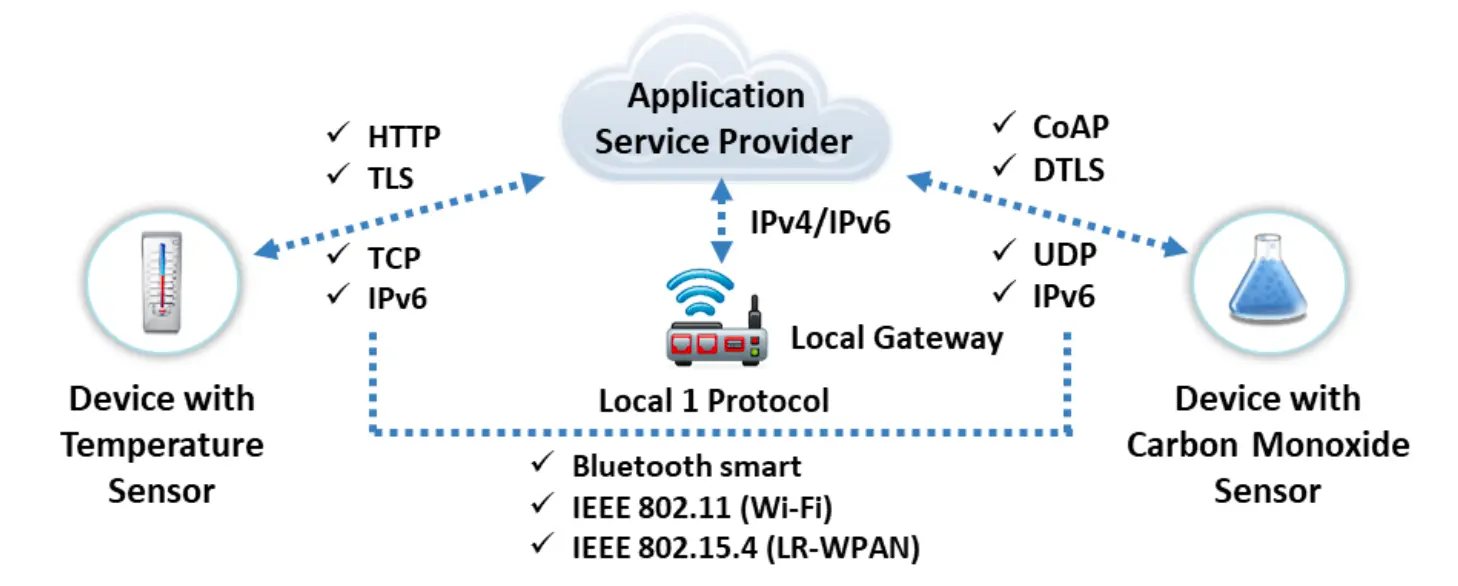
In the device-to-gateway communication model, the IoT device communicates with an intermediate device called a gateway, which in turn communicates with the cloud service. This gateway device could be a smartphone or a hub that is acting as an intermediate point, which also provides security features and data or protocol translation. The protocols generally used in this mode of communication are Zigbee and Z-Wave.
If the application layer gateway is a smartphone, then it might take the form of an app that interacts with the IoT device and with the cloud. This device might be a smart TV that connects to the cloud service through a mobile phone app.
Back-End Data-Sharing Communication Model
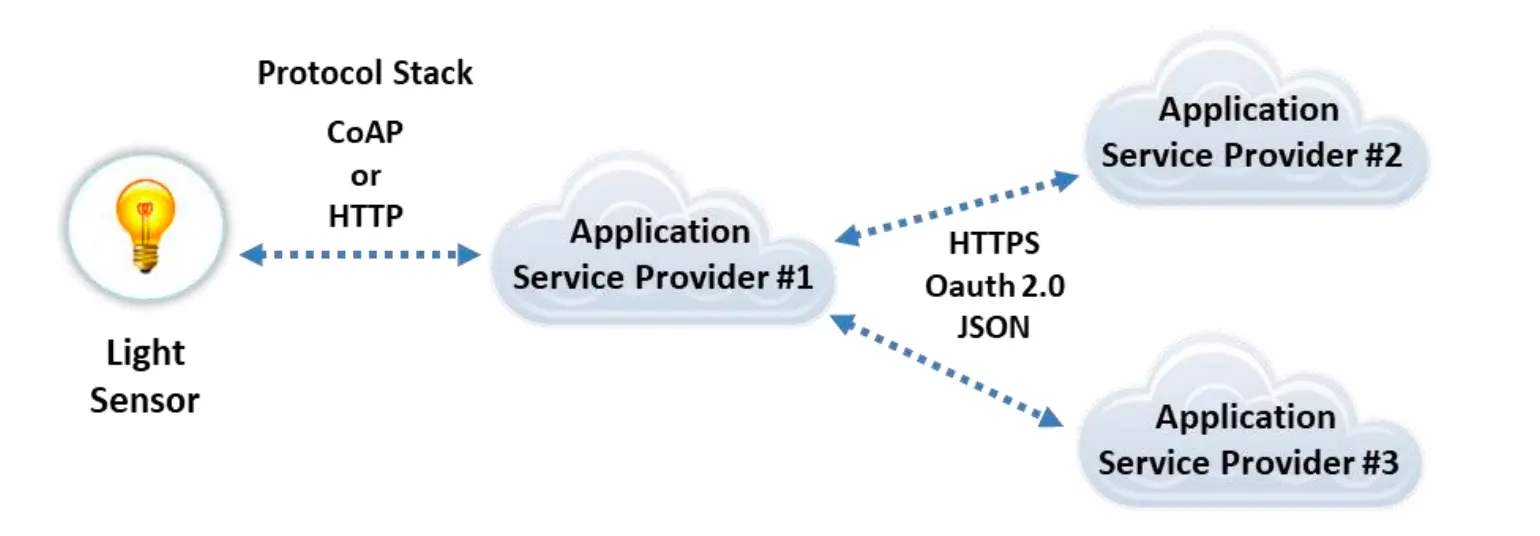
This type of communication model extends the device-to-cloud communication type such that the data from the IoT devices can be accessed by authorized third parties. Here, devices upload their data onto the cloud, which is later accessed or analyzed by third parties. An example of this model would be an analyzer of the yearly or monthly energy consumption of a company. Later, the analysis can be used to reduce the company's expenditure on energy by following certain energy-harvesting or saving techniques.